
This workshop update follows hot on the heels of our latest Magazine, as since going to press we have made excellent progress in several important areas and we wanted to share it with you.
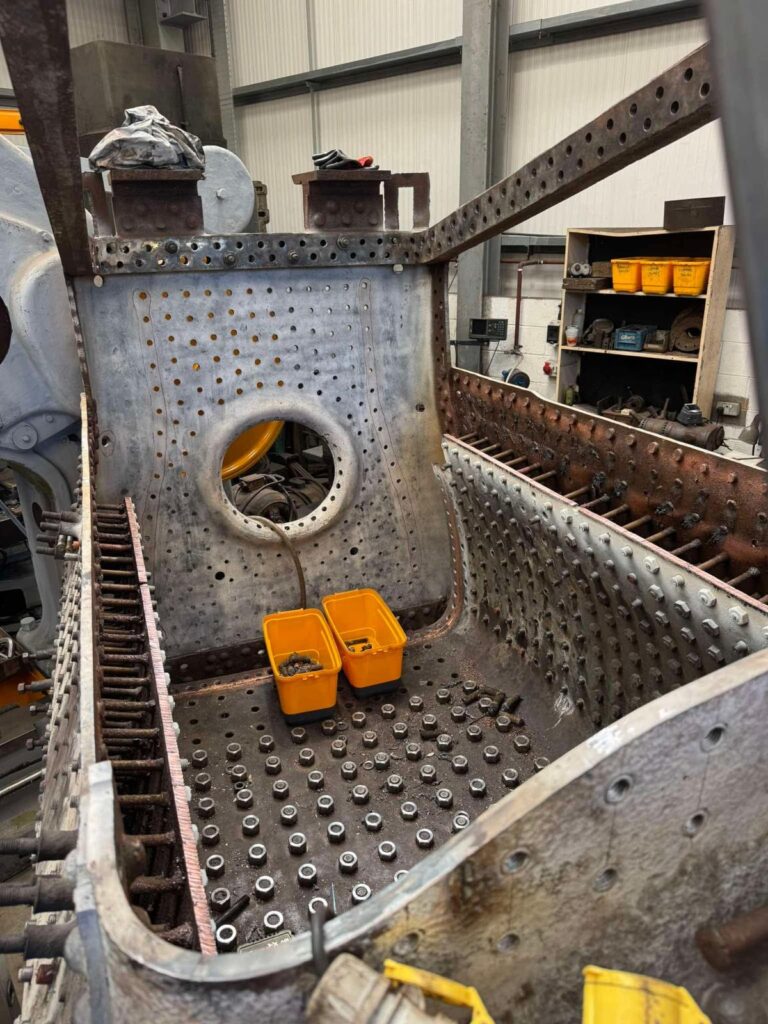
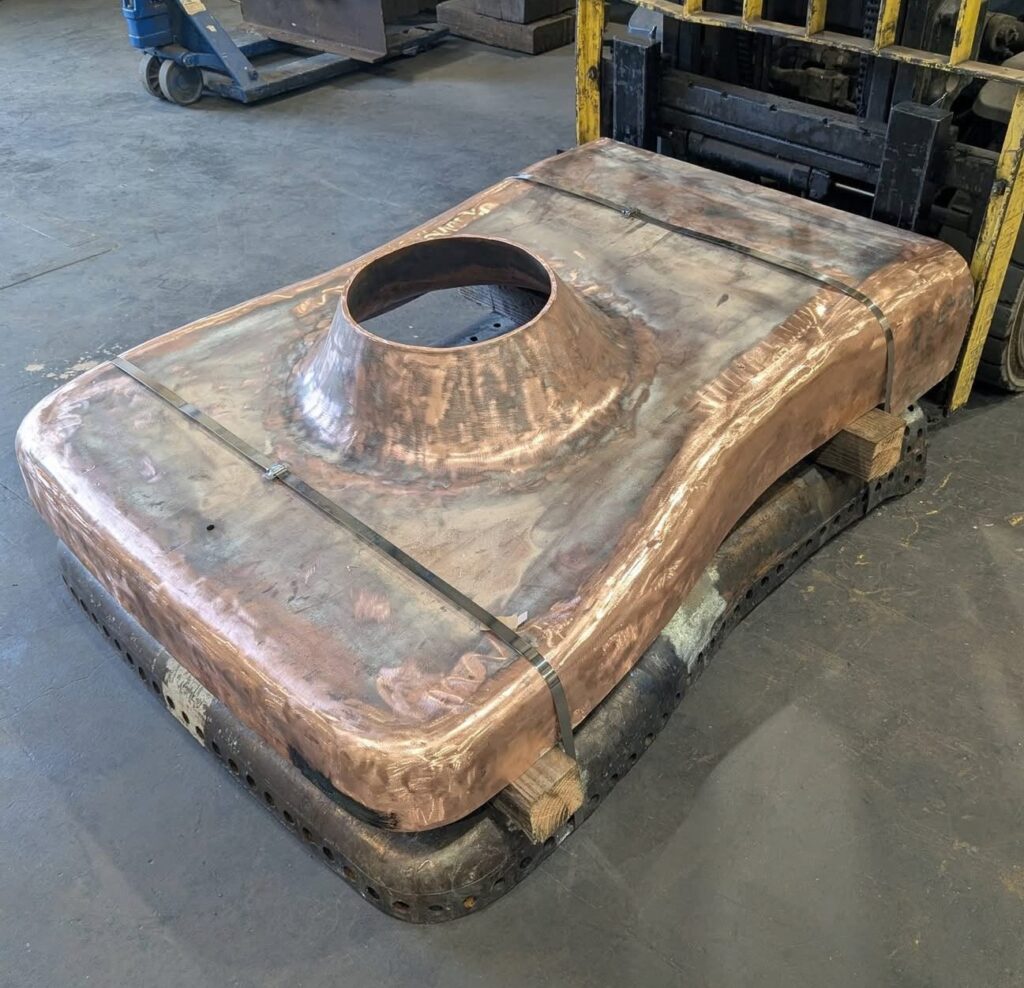
Starting with the boiler. Following protracted discussions between ourselves, Leaky Finders, and our boiler inspector we now know exactly what work is needed and how much it’s going to cost to complete the boiler. Including a small contingency, we expect the total cost to be just under £500,000. We have had to remove a little more of the copper and steel firebox sides than originally intended, to remove some flaws in the material, but the good news is the replacement copper sheets we already have are big enough to achieve this. Replacing more platework also helps us in that some of the larger size stays high up in the firebox which were approaching maximum size can be replaced with first size stays building more longevity into the boiler. The new copper doorplate flanged at Heritage Boiler Steam Services is complete and thanks to the generosity of shareholder Andrew Goodman both the new and old doorplates are being transported back down to Leaky finders FOC. At Leaky Finders the firebox tubeplate has had all the weld repairs completed, which means the lap edges have been returned to as new size and the holes which secure the tubeplate to the foundation ring should actually now line up with the holes in the foundation ring, a novel feature which was obviously lost on the BR workforce who carried out the boilers last overhaul!! The new copper side sheets for the firebox are being formed to follow the shape of the original. To save money the old front barrel section has been cut up to make the former enabling the new copper firebox sides to be heated and knocked over to the required shape. The front tubeplate is also complete, although it will be one of the last items to be fitted as with it out good access into the boiler is available. For those of you coming down to our open day on the 3rd of October all this work will be on display, and I will be on hand to answer any questions you may wish to ask.
At LMS, the finished steam brake cylinder has been fitted to the locomotive together with the adjuster and first pull rod to the cross beam on the trailing set of wheels.
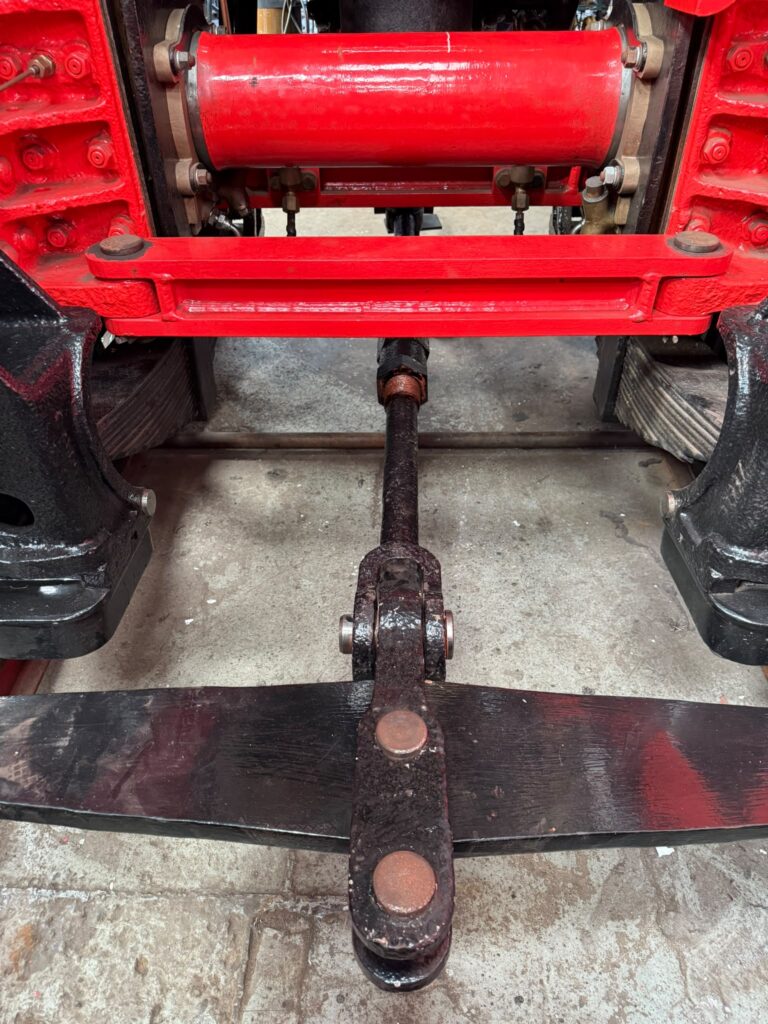
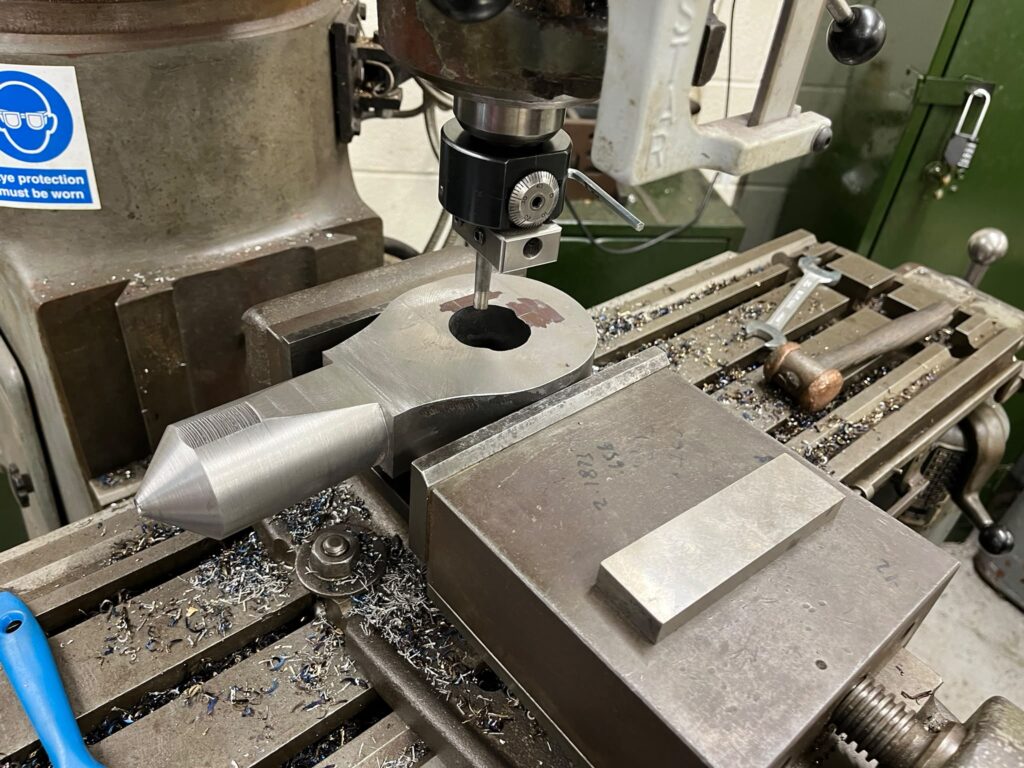
The 2 remaining pull rods to couple the brake gear to the driving and leading wheels are about to be fabricated, using the eyes machined at Toddington by volunteer Keith Harvey.
The big news we wanted to share with you is both the cylinders have finally been machined to remove the pitting in the bottom of the bores which occurred during its time at Barry Scrapyard when the front cylinder covers were removed by some helpful individual, presumably as a set of spares. The 17 ½” diameter cylinders had previously been bored out by BR to 17 5/8” the LHS had the worst amount of pitting (presumably the side facing the sea at Barry) which has had to be machined out to 17 ¾” the RHS wasn’t as bad, so it cleaned up at 17 11/16”. The maximum size the cylinders can be bored out to is 18”, after that a liner is required to be inserted, taking the bore to go back to 17 ½”. We are lucky that the cylinders should have at least another 2 bores in them so liners shouldn’t be required for 30 years or more. Having taken out more material than first hoped, we will need to replace the piston heads as the clearance between the head and the cylinder bore is now very nearly at the maximum allowed. Fortunately knowing this might be required, we already have a set of piston head castings in stock which will be machined and fitted on to the original piston rods.
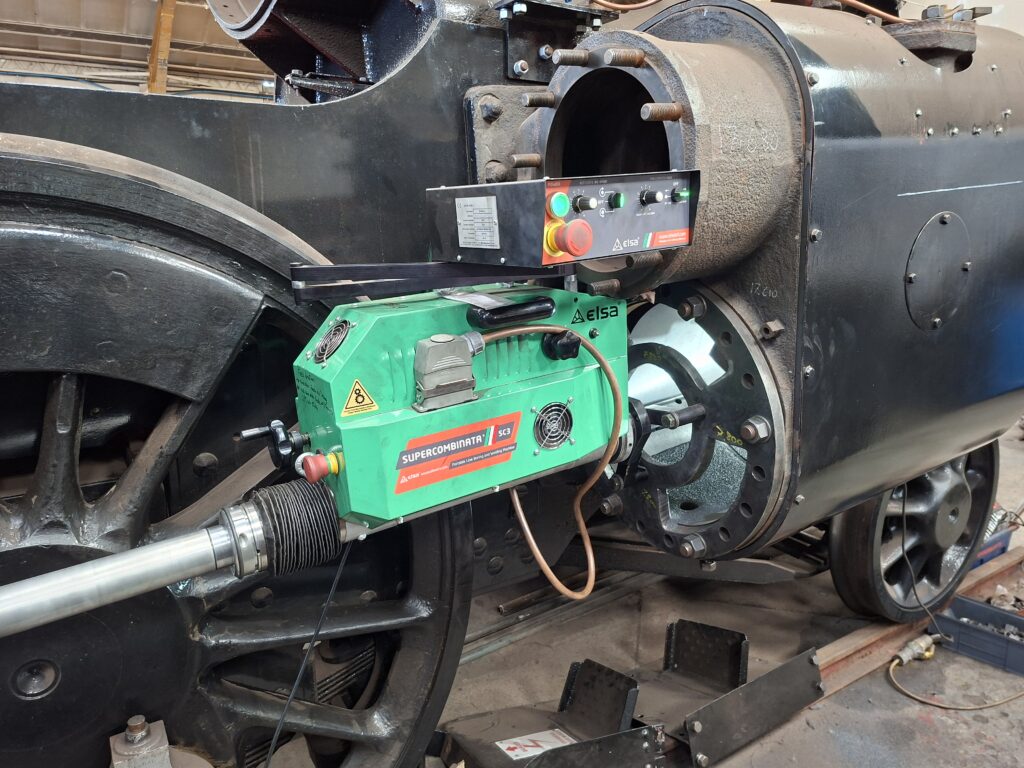
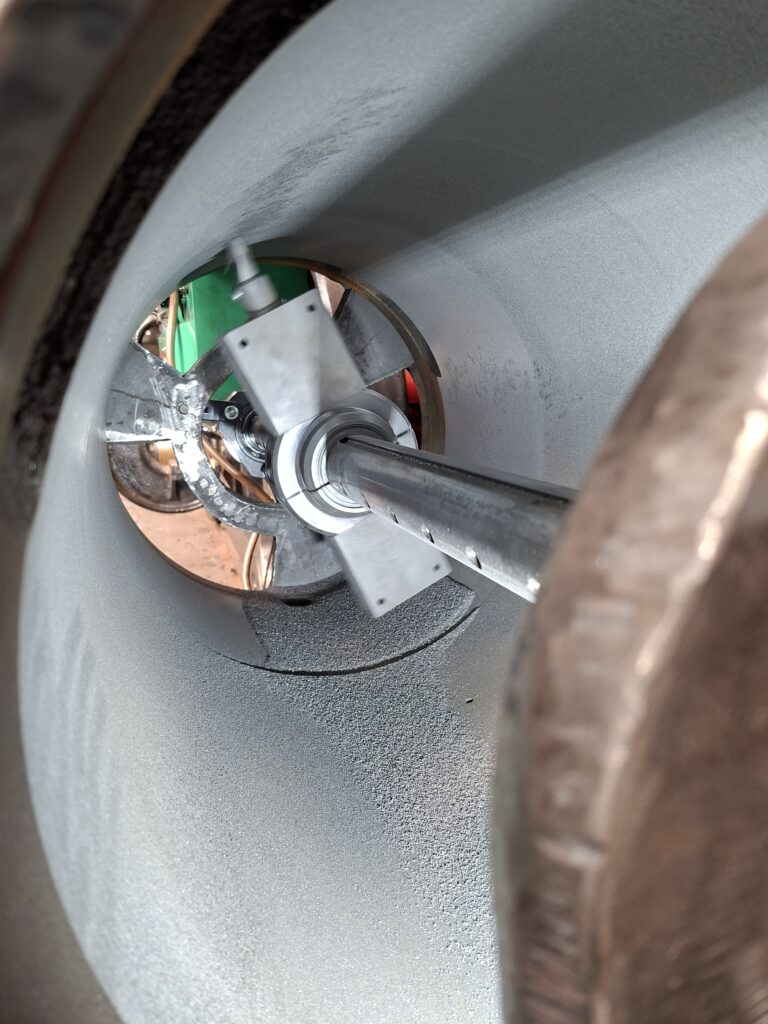
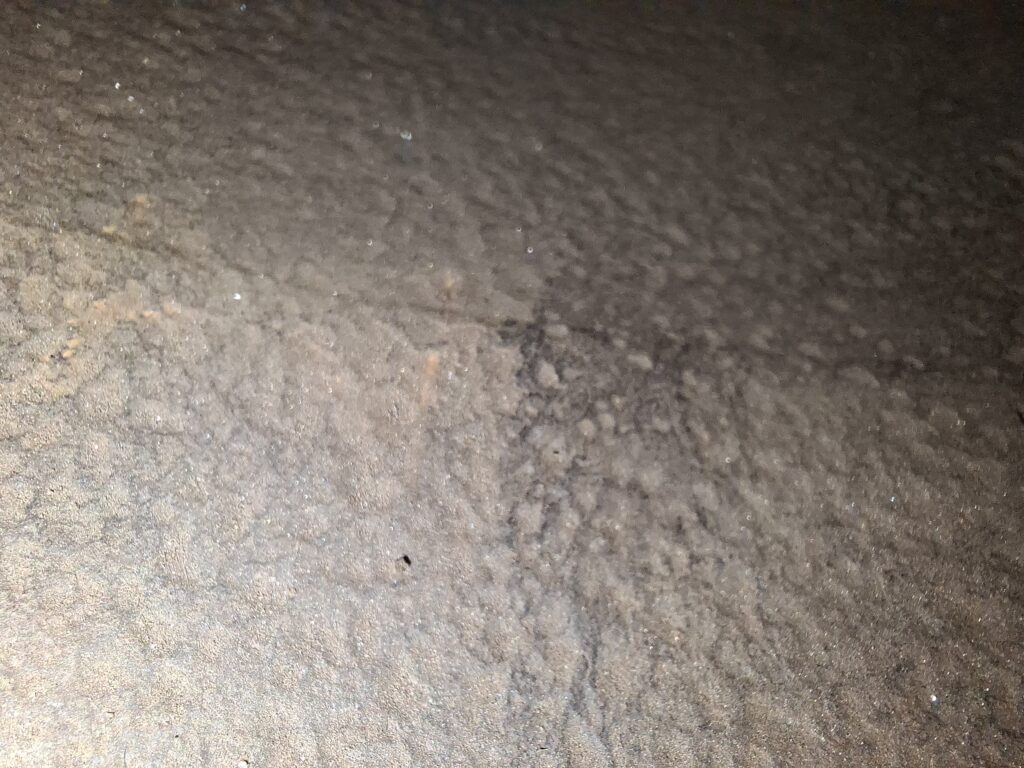
All the cylinder and valve covers have been shotblasted and painted and any of the sealing faces machined where required. All the old studs have been removed, and new studs are being fitted in the covers for the piston rod packing glands and the cylinder relief valves. New studs have also been screwed into the ends of the cylinders which has enabled the rear cylinder covers to be permanently fitted. This will allow the front brake hanger brackets to be fitted (and the hangers and crossbeams), as due to the proximity you can’t access the rear cylinder covers with them in place.
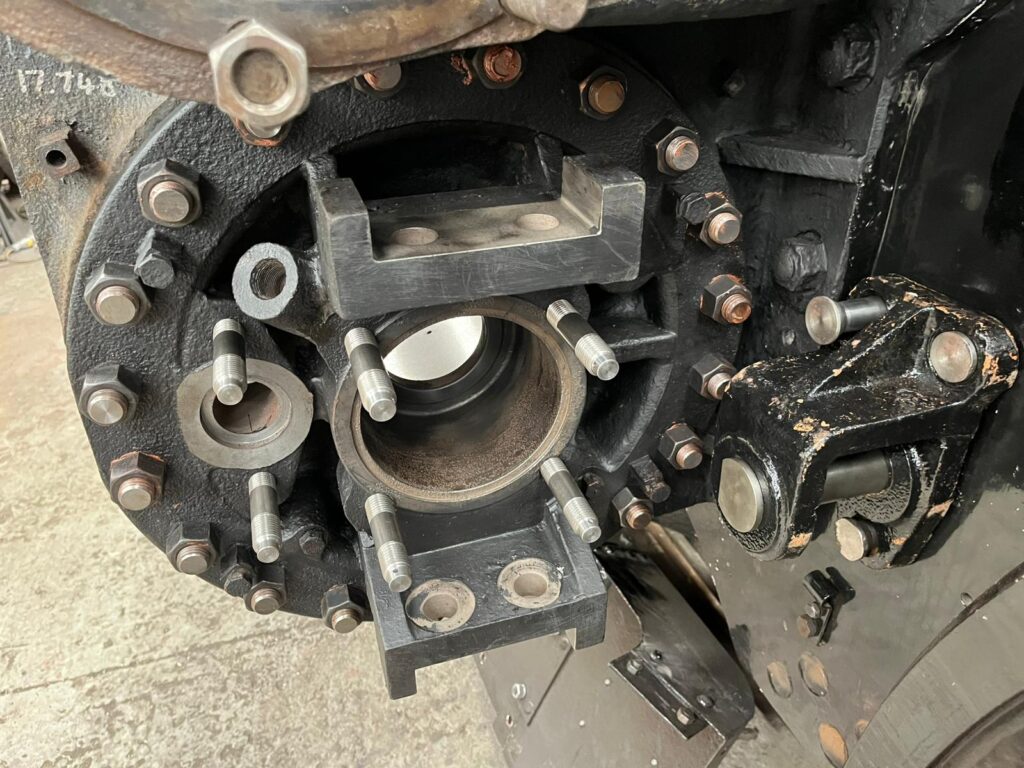
With the rear cylinder covers fitted one of the next major tasks will be to align and secure the slide bars, once that is done the previously white metaled crossheads can be machined and fitted, that in turn will enabling us to complete and fit the connecting rods to the locomotive. As you can see the machining of the cylinders opens up the next major phase of works on the locomotive. The valve bores are still to be machined but will be done in conjunction with current standard 4 shed mate 80072.
After more than 2 years on order, the replacement valve rod crosshead has been delivered. The arrival of this component is a major milestone in that it marks the final item required for the motion on the locomotive. All that remains to be done is final machining of the tapered bore, so it fits accurately on the valve spindle. This component has been kindly sponsored by shareholder and fellow steam Inspector Jeff Lacey, many thanks Jeff.
Recent communication with our friends at 76084 locomotive company has revealed that they are experiencing difficulties with the supplier producing new return cranks to replace the two which we loaned to them 15 years ago. As a result, and to enable us to get on and complete the motion on our locomotive I have regrettably had to ask for our originals to be returned, so a trip over to the North Norfolk Railway is on the cards in the near future to collect them.
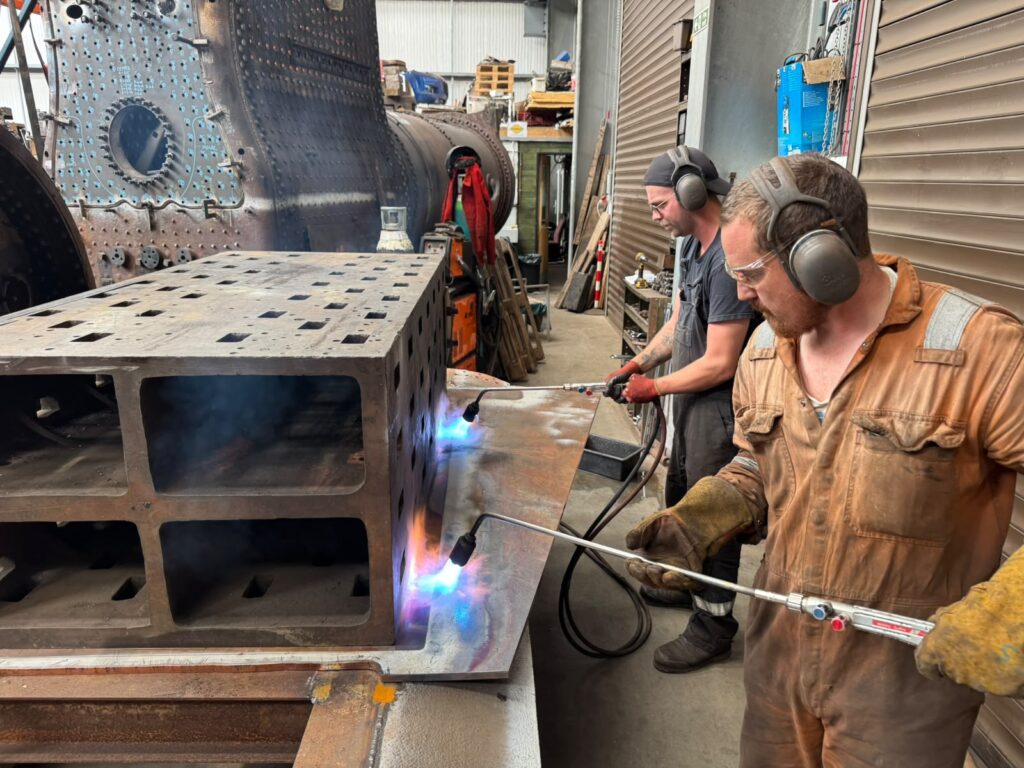
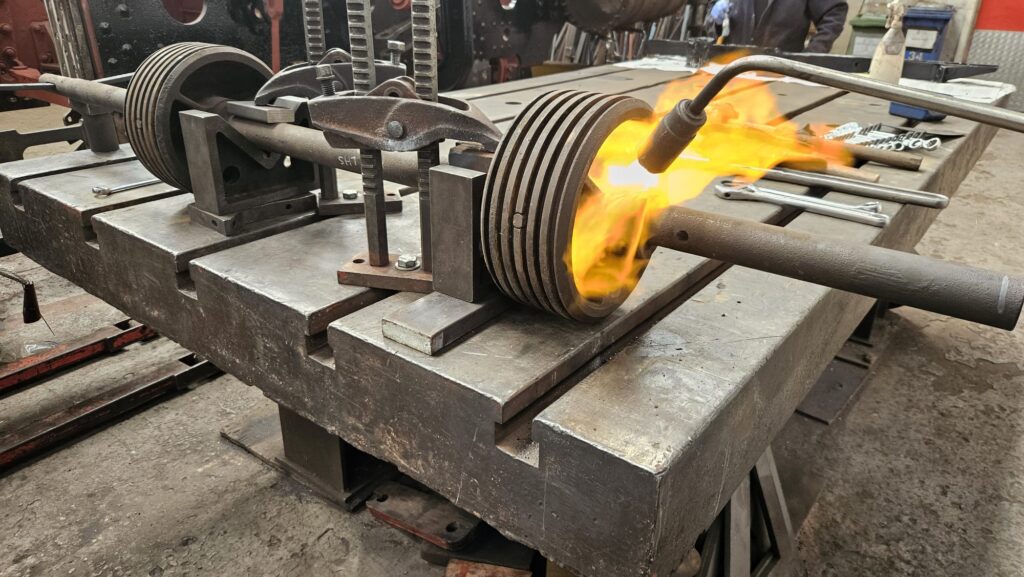
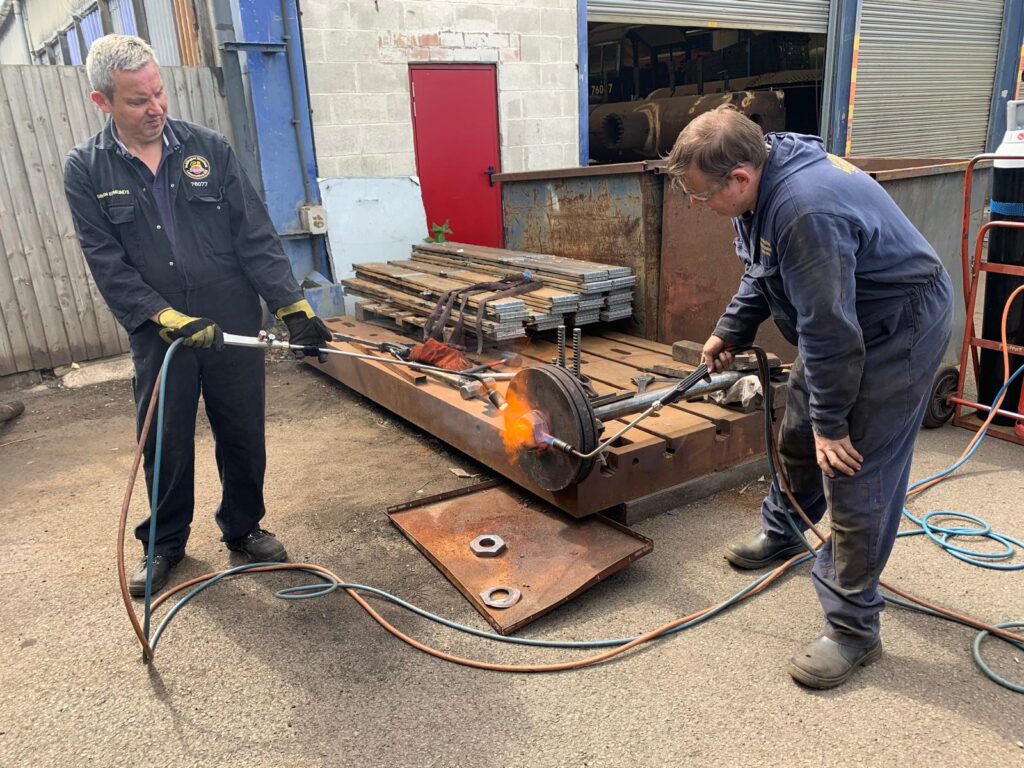
A couple of volunteer workdays up at LMS have seen the old piston heads removed from the rods and the valve heads removed from the valve spindle. The nuts securing the piston heads put up quite a fight, but 2 gas torches heated them sufficiently to break the rust seal and enable us to unwind them. The nuts were so big, a custom spanner had to be made for the task. The piston rods have already been ground many years ago so should only need a polish in the lathe before reusing, the piston valve spindles on the other hand are still in ex Barry condition so will need machining to remove heavy pitting in the steel.
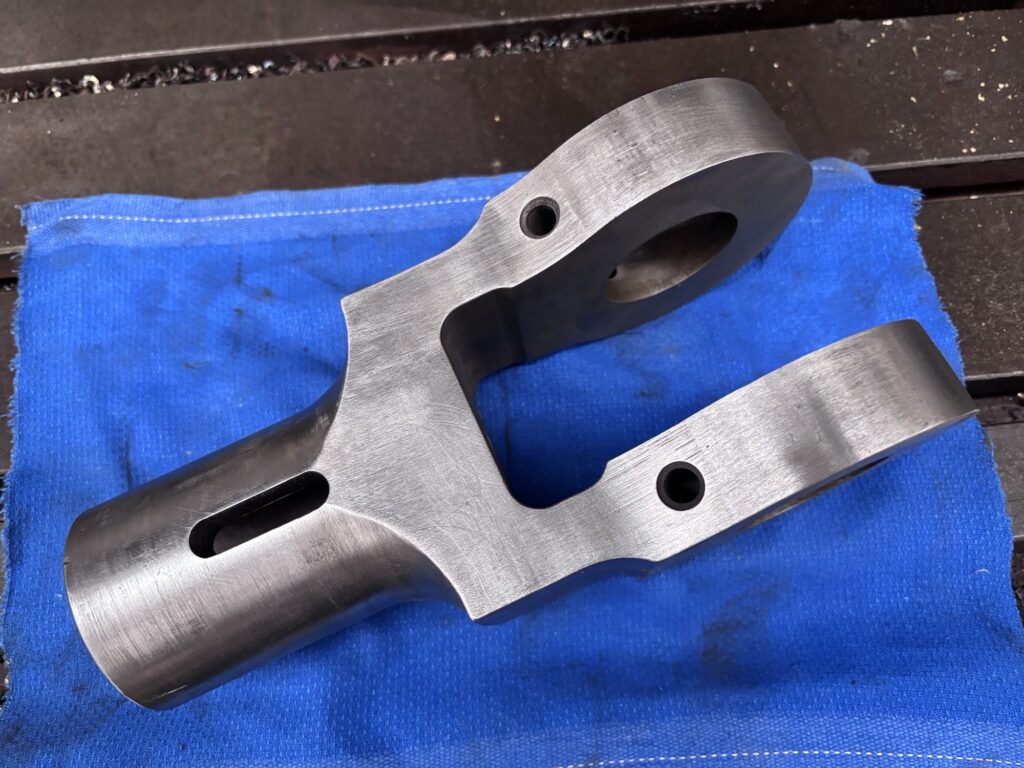
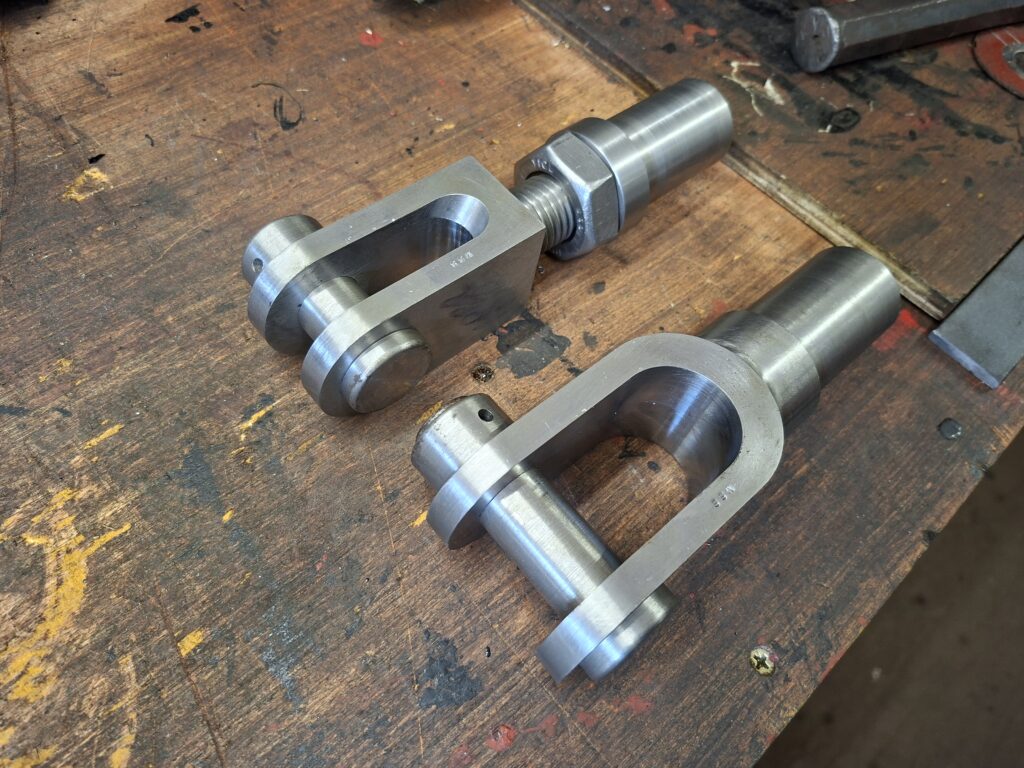
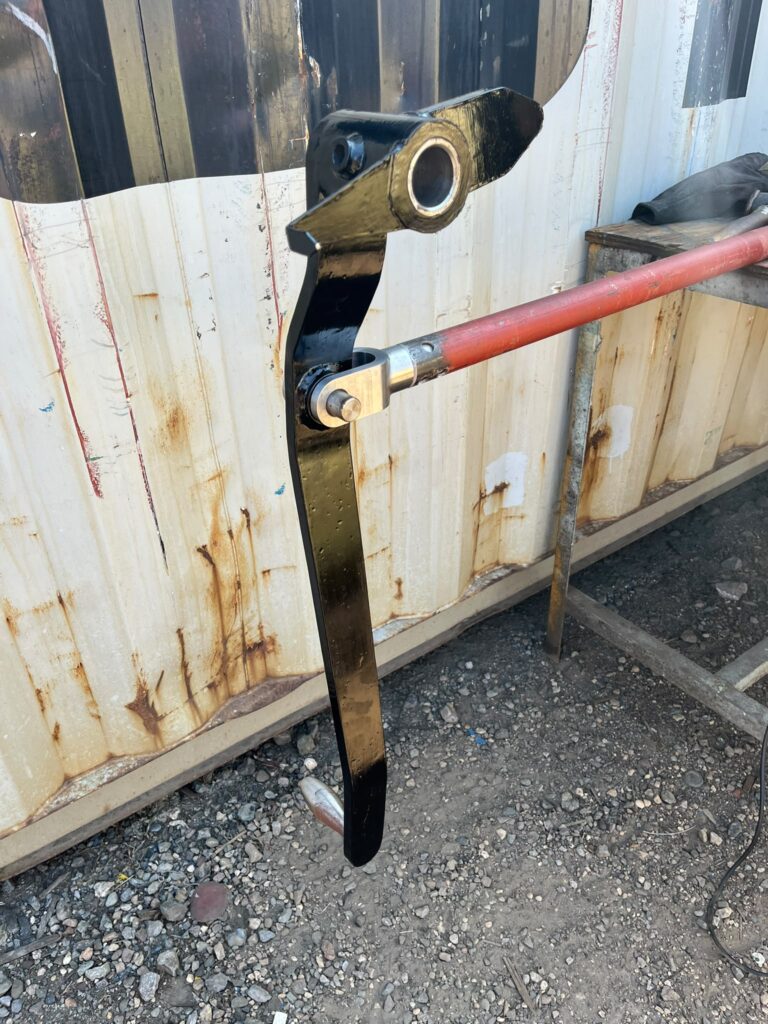
Supporter Malcolm Stringer has been busy in his home workshop, Malcolm likes a challenge so agreed to machine the 2 forked ends for the regulator operating rod, which had been kicking around on the floor of the container for many months waiting for me to make them. As usual Malcolm has made an excellent job of these awkward, shaped components. Malcolm’s CNC milling machine came in very handy for the task profiling out the U-shaped ends. Within 24 hours of delivery, they had been fitted to the rod and welded in place.
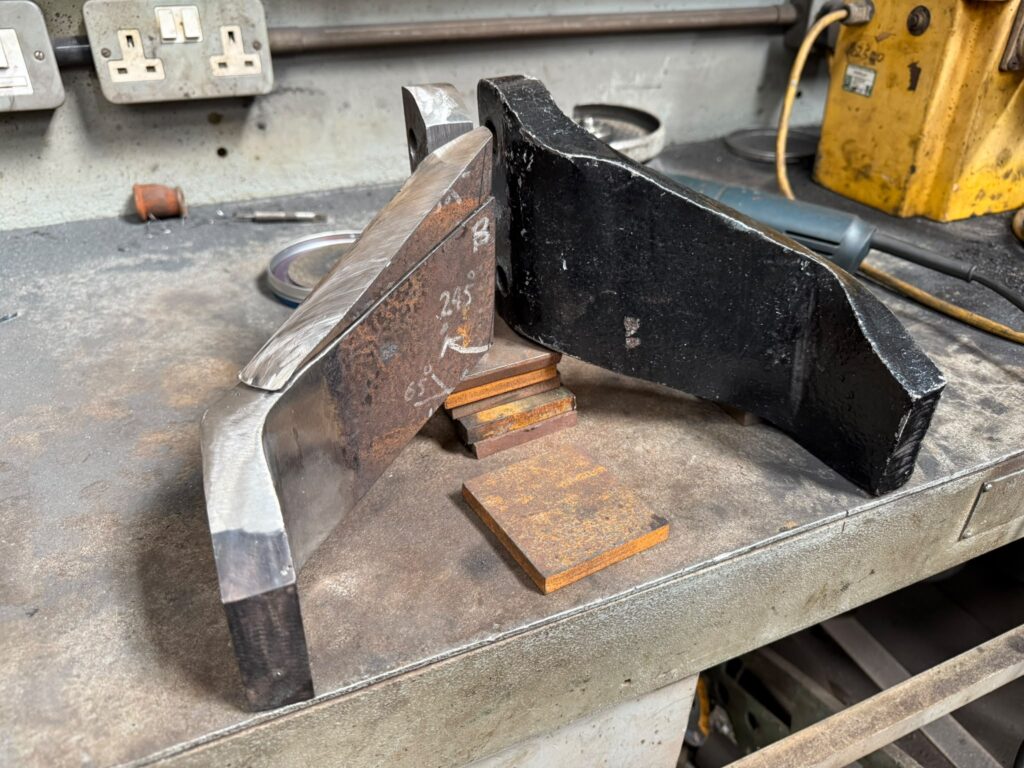
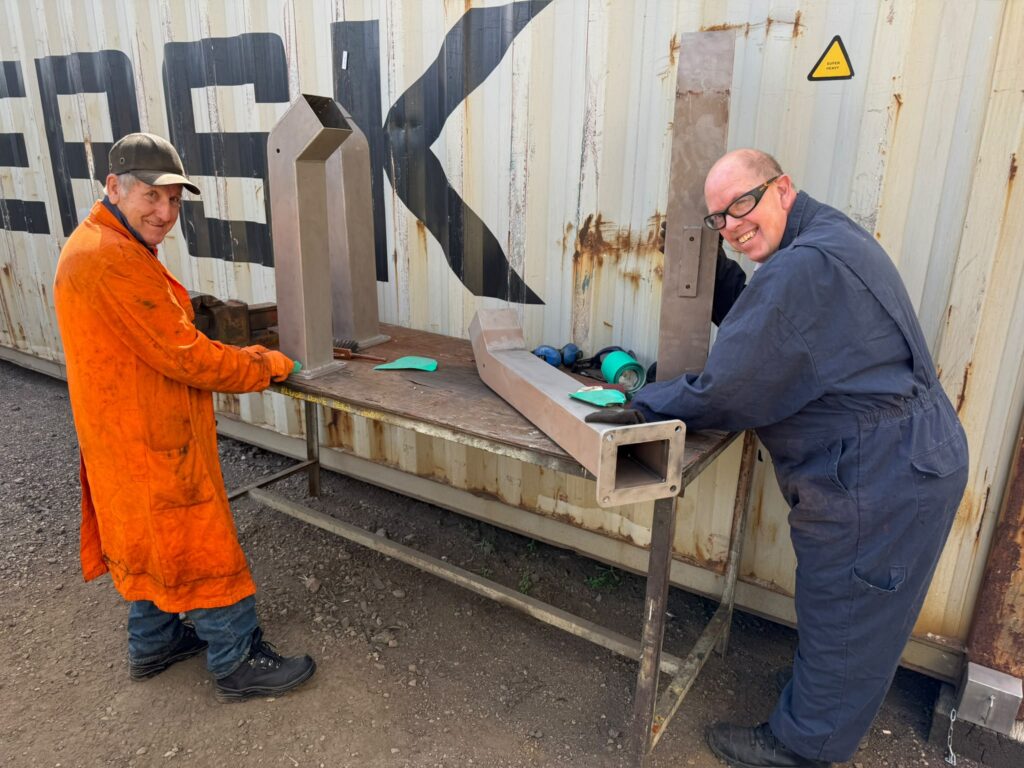
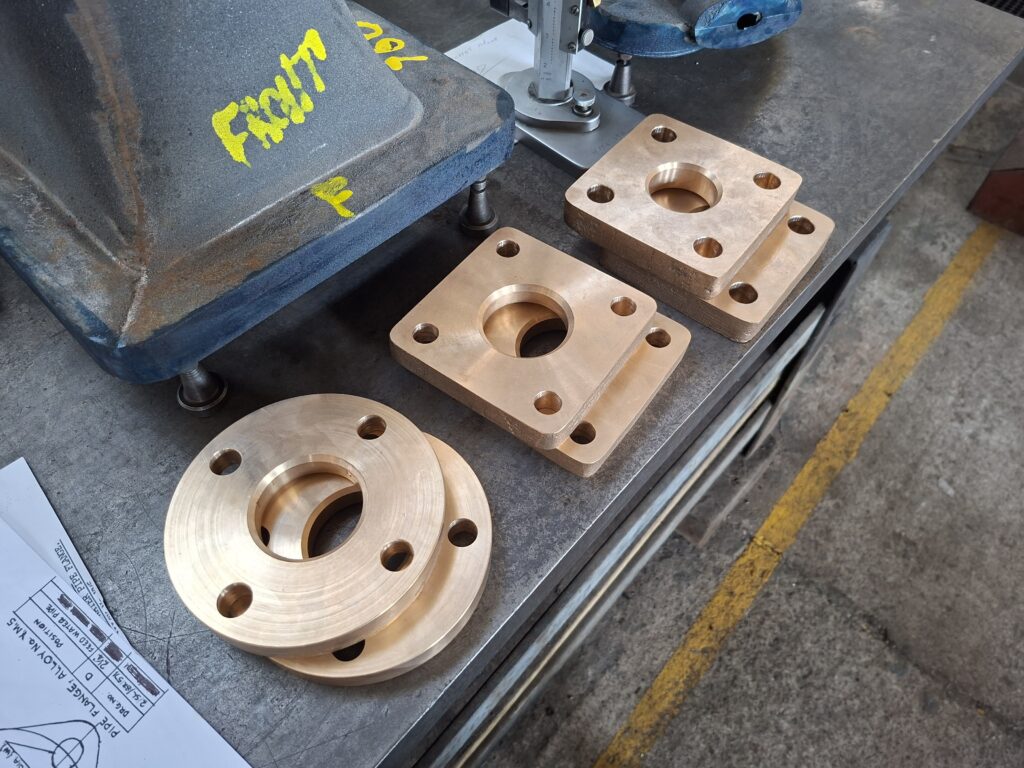
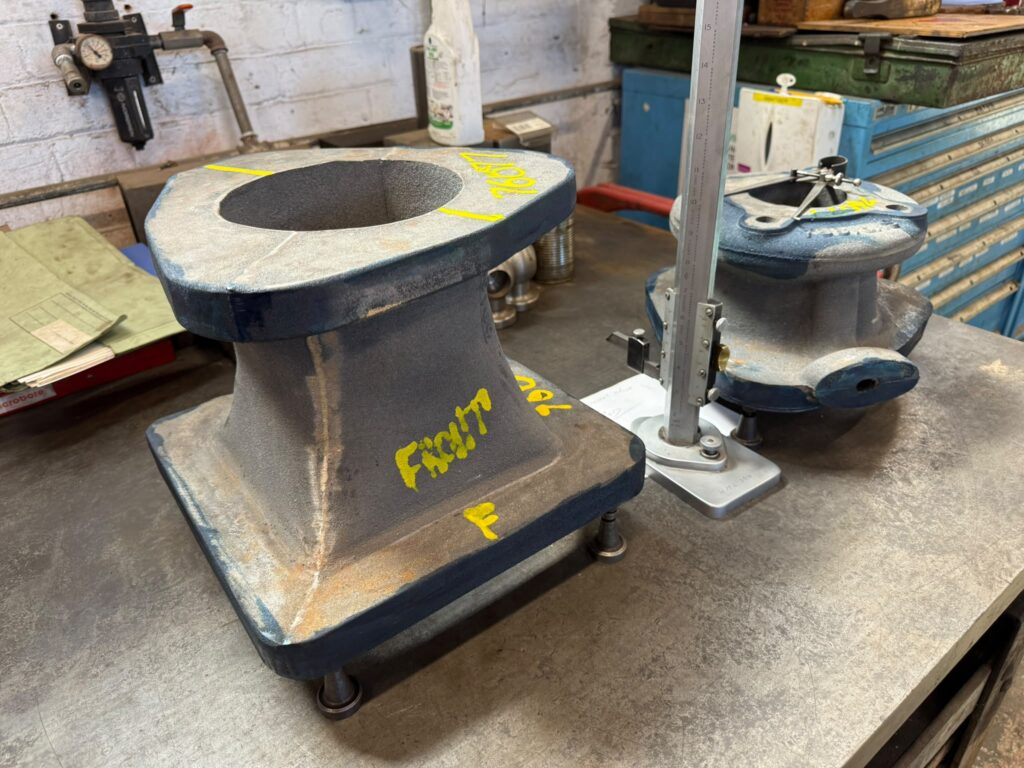
At Toddington our volunteers have been busy making many of the brackets and missing parts for the locomotive. We had lost one of the original guard irons which attach to the pony truck, so armed with an offcut of 1” thick steel plate Graham Gould spent several days cutting out the required shape. As we couldn’t easily bend the steel, we fabricate the new one by welding it together. We have also been making blanking plates to hydraulic all the boiler fittings, as well as painting all the previously made parts such as the sand box filler pipes in preparation for fitting to the locomotive. In the machine shop at Toddington new bolts to secure the boiler have been made as well as pipe flanges for the injector steam and delivery pipes. The never-ending supply of pipe nuts and cones continue to be machined, both at Toddington and in my home workshop. GWSR machine shop stalwart Rod Minchin has started machining the replacement blastpipe and cap. Unfortunately, the blast pipe cap casting has been found to be defective (the core having slipped during the casting process) so has had to be sent back to the supplier for a replacement to be cast.
Finally, a big thankyou to everyone supporting us, practically and financially we can’t do this without you.
Words and Pictures: Andrew Meredith – TSLL Engineering director